On the Construction of the Model
The proposed model of consciousness is a formal reconstruction of C. G. Jung’s psychological typology. Some of its starting propositions are taken directly from Jung’s work; others are introduced as additional assumptions required to build a logically consistent and structurally complete model from Jung’s propositions.
It is essential to distinguish between starting assumptions and results of the construction. In particular, the existence of differentiated sixth and seventh functions, the emergence of two alternative paths of consciousness, and the presence of all four psychic functions on each of these paths are not assumed in advance. They arise only in the course of constructing the model.
The model is built step by step. At each stage, we use only propositions that have already been accepted and examine what structure follows from them.
Jung’s Propositions
Two Attitudes
Jung distinguishes two attitudes: extraversion and introversion.
In his terminology, consciousness is characterized by one of these attitudes, while the attitude of the unconscious is opposite to the attitude of consciousness: an extraverted conscious attitude corresponds to an introverted unconscious attitude, and an introverted conscious attitude corresponds to an extraverted unconscious attitude.
In what follows, once we move into the terminology of the present model, we will preferably speak not of the “attitude of consciousness,” but of the attitude of the dominant function and of the attitudes of the other functions.
Four Psychological Functions
Jung distinguishes four psychological functions:
- thinking,
- feeling,
- sensation,
- intuition.
On the basis of this distinction, the present model defines four psychic functions:
- S — perception of invariants;
- N — perception of changes;
- F — generation of the significance of knowledge for the subject;
- T — generation of the significance of knowledge for the non-subject.
Significance for the subject cannot be neutral. If some knowledge is indifferent to the subject, this does not mean that a “neutral F-significance” has been generated. It means that significance for the subject has not been generated in that case.
Two Pairs of Opposite Functions
Jung’s psychological functions form two pairs of opposites:
thinking ↔ feeling
and
intuition ↔ sensation.
In the terminology of the present model:
T ↔ F
and
N ↔ S.
The rational psychic functions T and F are opposite to each other.
The irrational psychic functions N and S are also opposite to each other.
Differentiation
Jung’s concept of differentiation is especially important for the construction of the model.
We understand differentiation as articulation or separation into distinct elements.
A differentiated function is a function whose elements of content are separated from one another and from the content of other functions.
Undifferentiation means fusion.
An undifferentiated function does not form articulated, independent elements of content; its content can be fused with the content of other undifferentiated functions.
In the present model, a function arises either fully differentiated or fully undifferentiated. We do not assume an intermediate state in which a function occupying the same structural position is only partly differentiated.
The Dominant Function
The dominant function is the most highly differentiated function.
It is conscious.
In the present model, elements of the dominant function can arise spontaneously as an autonomous process of consciousness, without requiring a prior connection with elements of other functions.
The Auxiliary Function
Jung assumes that an auxiliary, or secondary, function can exist alongside the dominant function.
If the dominant function is irrational, the auxiliary function must be rational.
If the dominant function is rational, the auxiliary function must be irrational.
Both the dominant and the auxiliary functions are conscious.
Why the Dominant and Auxiliary Functions Have the Same Attitude
This point requires special explanation because in later typological systems — particularly in common interpretations of MBTI and in socionics — the dominant and auxiliary functions are usually assigned opposite attitudes.
Jung’s construction permits another conclusion. If extraversion or introversion characterizes the attitude of consciousness, and the dominant and auxiliary functions are both conscious and work directly together, there is no reason to assign them opposite attitudes.
There is, however, a more direct structural argument.
In the present model, an element of the auxiliary function can arise only in connection with an already existing element of the dominant function. The two connected elements therefore refer to one and the same object.
This object may be concrete or abstract.
A concrete object may be, for example, a particular person, object, event, or situation. An abstract object may be a class of objects, a relation, a rule, a regularity, a category, or a role. A role is an especially important form of abstract object: a particular person may be a doctor, teacher, parent, or manager, but the role is not identical with the concrete individual and can be occupied by different people.
If two elements refer to the same object, the way in which that object is given cannot change arbitrarily when moving from one connected function to the other. Therefore, the dominant and auxiliary functions have the same attitude.
Additional Assumptions of the Model
The following propositions are assumed for the further construction.
1. All Four Functions Can Also Exist in the Unconscious
Jung shows that all four functions can operate consciously. We assume that all four psychic functions can also be represented in the opposite, unconscious attitude.
2. Elements of the Dominant Function Arise Spontaneously
An element of the dominant function can form as an autonomous psychic process without requiring a prior connection with an element of another function.
The dominant function is always differentiated.
3. A Rational and an Irrational Element Can Be Directly Connected
Two function elements can be directly connected only if one belongs to a rational function and the other to an irrational function.
Thus, for example, a direct connection between N and F or between S and T is possible, but not between N and S or between F and T.
Opposite functions stand in another kind of relationship — a relation of opposition.
4. An Element of the Auxiliary Function Arises Only in Connection with an Element of the Dominant Function
The auxiliary function does not independently begin forming its own sequence of elements.
An element of the auxiliary function can arise only in connection with an already existing element of the dominant function.
5. An Element of the Third Function Arises Only in Connection with an Element of the Auxiliary Function
Similarly, an element of the third function does not arise independently.
It can form only in connection with an already existing element of the auxiliary function.
6. Psychic Functions Arise in Opposite Pairs
The emergence of a function is not treated as an isolated event.
Psychic functions arise in pairs together with their respective opposites.
The two members of a pair do not have to possess the same differentiation status.
7. A Differentiated Function Is Conscious
If a function arises as differentiated, its result is conscious, regardless of whether its attitude coincides with the attitude of the dominant function.
The process by which that result is formed may nevertheless take place unconsciously.
This distinction becomes essential when the sixth and seventh functions emerge.
8. The Principle of Directed Asymmetry
Differentiation is not distributed symmetrically across the functions.
The auxiliary function arises fully differentiated, whereas the function opposite to it in the same attitude arises fully undifferentiated.
This asymmetry is a fundamental condition of the model. Without it, the subsequent construction would produce a different structure.
Constructing the Model
Eight Positions
We begin by establishing a scheme with eight positions.
Positions I–IV belong to the conscious attitude.
Positions V–VIII belong to the opposite, unconscious attitude.
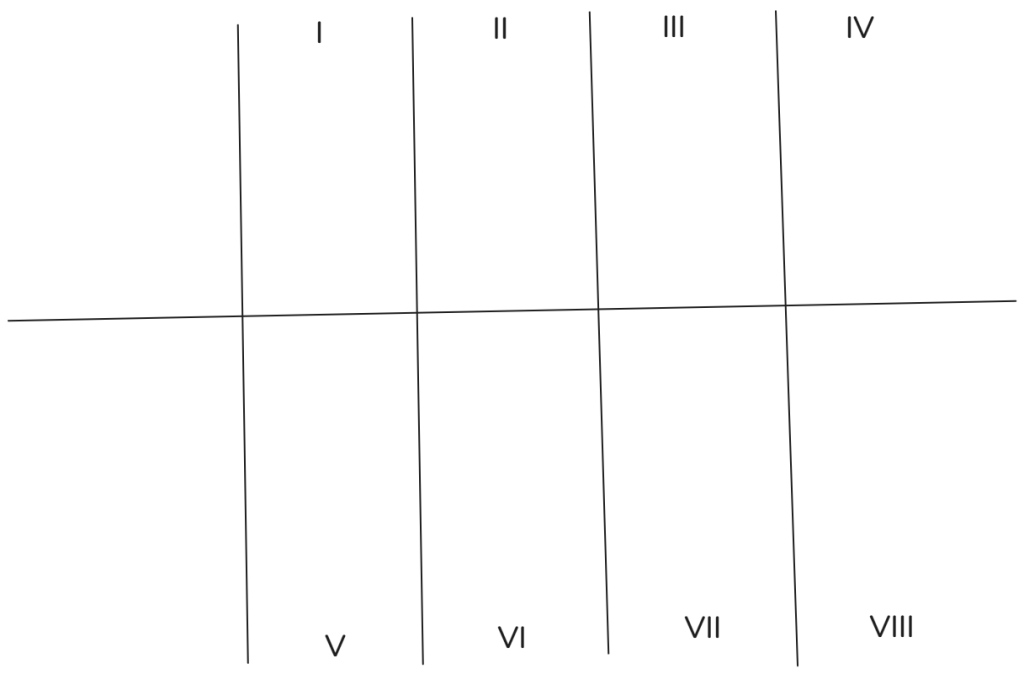
Figure 1. Initial eight-position scheme
At this stage, nothing has yet been said about two paths of consciousness. We have only a space of possible functional positions.
The positions are distributed as follows:
- I — dominant function;
- II — auxiliary function;
- III — the function opposite to the dominant function in the same attitude;
- IV — the function opposite to the auxiliary function in the same attitude;
- V — the function opposite to the dominant function in the opposite attitude;
- VI — the function opposite to the auxiliary function in the opposite attitude;
- VII — the dominant function in the opposite attitude;
- VIII — the auxiliary function in the opposite attitude.
Once the attitude of the dominant function, the dominant function itself, and the auxiliary function are specified, the entire eight-position structure is thereby determined.
First Step: The Dominant and Fifth Functions
An element of the dominant function arises.
In the figures, an element of a differentiated function is represented by a circle.
Because psychic functions arise in opposite pairs, the content of the opposite fifth function arises simultaneously with the element of the dominant function.
The fifth function is inferior and arises undifferentiated. Undifferentiated content is represented by a cloud.
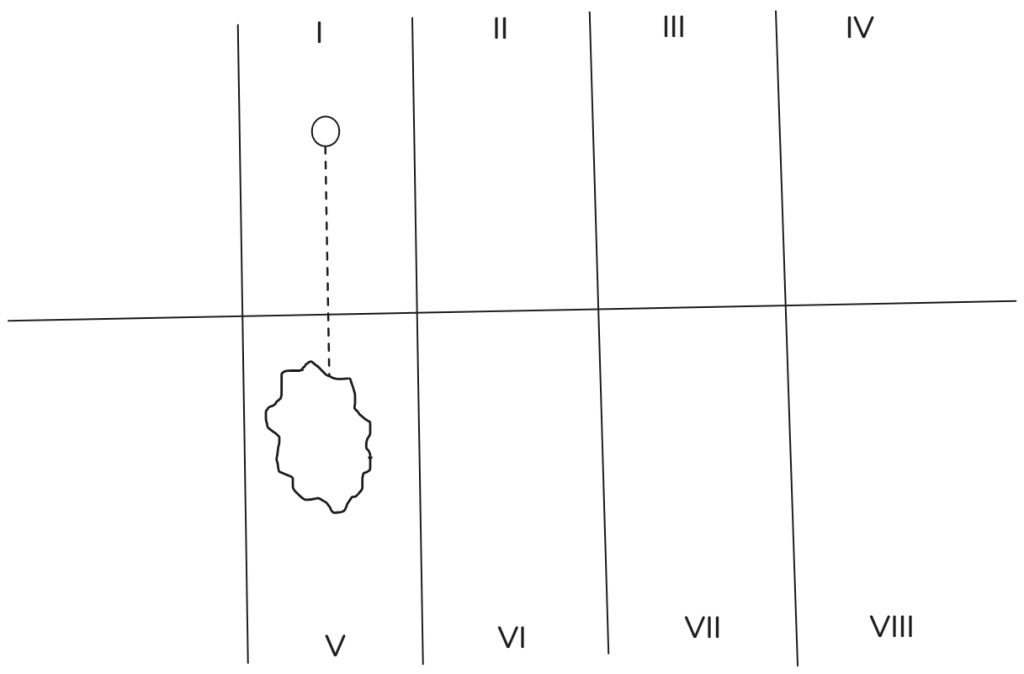
Figure 2. Simultaneous emergence of functions I and V
The dashed line between them does not indicate temporal sequence. It indicates the relation of simultaneous emergence between opposite functions.
At this stage we have obtained:
- I — the differentiated dominant function;
- V — the undifferentiated opposite function in the opposite attitude.
Second Step: Emergence of the Auxiliary Function
An element of the auxiliary function can arise only in connection with an already existing element of the dominant function.
Therefore, the next element in time arises in position II.
The connection
I → II
indicates temporal sequence.
The arrows in the diagrams always indicate the temporal order in which elements arise.
In the initial scheme, time is directed from left to right.
However, the emergence of II does not produce only a single new element.
Several processes take place simultaneously here, and it is at this point that the structure becomes considerably more interesting.
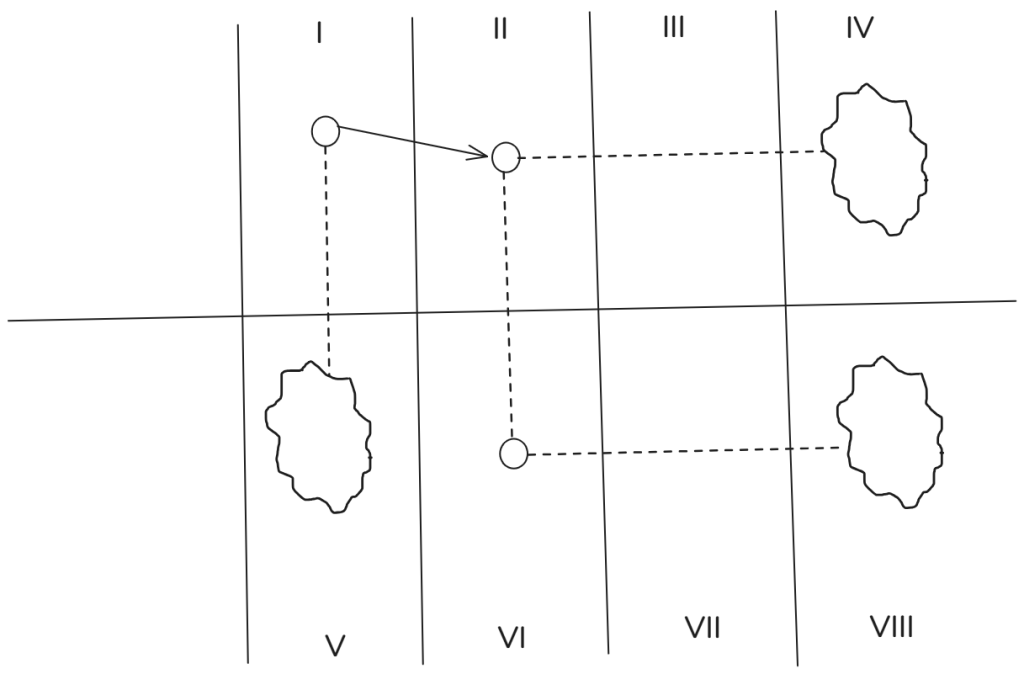
Figure 3. Emergence of functions II, VI, IV, and VIII
Simultaneous Emergence of Function VI
Together with the differentiated element II, an element of the opposite function VI arises in the opposite attitude.
Since what arises here is an element of a function, VI is also differentiated.
Thus, after the emergence of II, we obtain another differentiated function — VI — even though it occupies the half of the initial scheme assigned to the unconscious attitude.
The process by which its content is formed takes place unconsciously.
According to the rule introduced above, however, a differentiated function is conscious regardless of its attitude. What becomes conscious, therefore, is not the process of forming the element of VI itself, but its finished result.
Subjectively, the appearance of such a finished result may be experienced as sudden understanding or sudden knowledge — as an insight.
For this reason, we will refer to VI as one of the insight functions.
Simultaneous Emergence of Function IV
At the same time as the differentiated content of the auxiliary function II arises, the content of its opposite function IV arises in the same attitude.
Here, however, the principle of directed asymmetry applies:
- II arises differentiated;
- IV arises fully undifferentiated.
For this reason, II is represented in the diagram by a circle, while IV is represented by a cloud.
Simultaneous Emergence of Function VIII
An analogous process occurs in the opposite attitude.
At the same time as the differentiated function VI arises, the content of its opposite function VIII arises.
VI is differentiated.
VIII arises fully undifferentiated.
Thus a single step — the formation of an element of the auxiliary function — leads simultaneously to the appearance of several new components of the structure.
After this step, we have:
differentiated functions:
I, II, VI;
undifferentiated functions:
IV, V, VIII.
Up to this point, function VI has not been introduced as an additional special assumption. It emerges from the application of the rules already accepted.
Third Step: Emergence of the Third Function
The second rule governing the sequential formation of elements now applies:
An element of the third function can arise only in connection with an already existing element of the auxiliary function.
Therefore, after II an element of III arises:
I → II → III
III arises as a differentiated function.
But psychic functions arise in pairs.
Therefore, simultaneously with III, function VII arises in the opposite attitude.
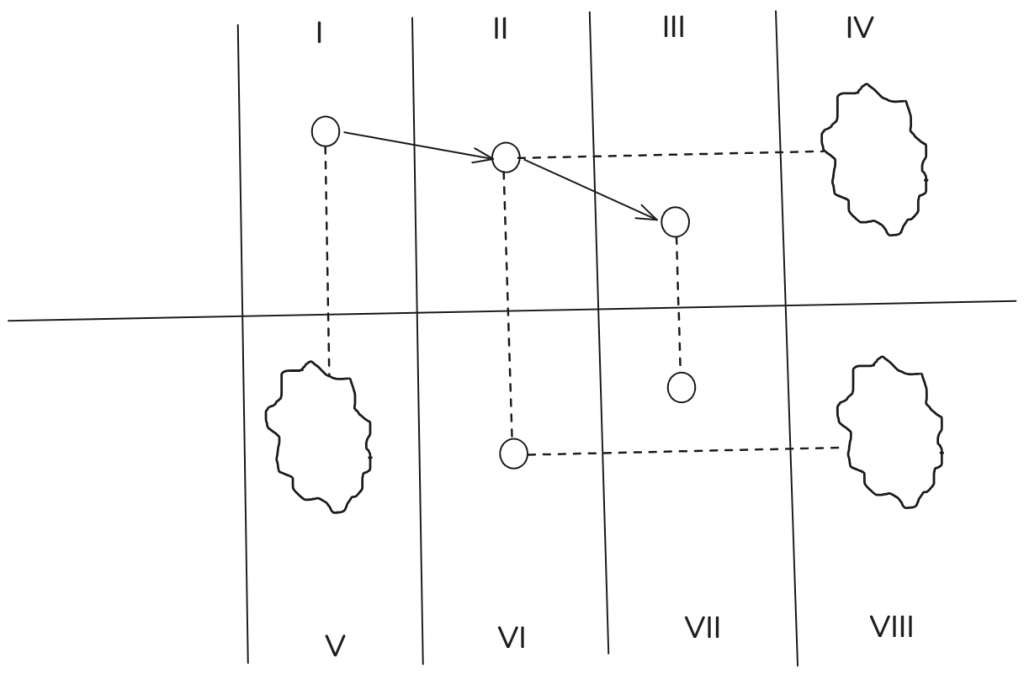
Figure 4. Emergence of functions III and VII
VII, like VI, arises differentiated.
The process of its formation takes place unconsciously, but the completed differentiated result becomes conscious.
VII is therefore the second insight function.
All eight positions in the scheme are now occupied.
The following structure has emerged:
- I — differentiated;
- II — differentiated;
- III — differentiated;
- IV — undifferentiated;
- V — undifferentiated;
- VI — differentiated;
- VII — differentiated;
- VIII — undifferentiated.
It is important that this distribution was not specified in advance as a list of properties assigned to the positions. It emerged in the course of the step-by-step construction.
What Happens to the Initial Division Between Conscious and Unconscious?
At the beginning of the construction, the upper half of the scheme corresponded to the conscious attitude and the lower half to the unconscious attitude.
After the emergence of VI and VII, the situation becomes more complex.
VI and VII occupy positions belonging to the opposite, initially unconscious attitude, and the processes by which their elements are formed take place unconsciously. Yet both functions are differentiated. Therefore, the completed results of these processes become conscious.
The original spatial division of the scheme therefore cannot be understood directly as the final boundary between what can and cannot be present in consciousness.
The unconscious participates in the formation of contents that subsequently appear in consciousness as completed differentiated results.
The Ring Structure of the Model
Up to this point, the model has been represented on a plane as an eight-position scheme.
The resulting structure, however, can be understood as ring-shaped.
This means that its extreme positions are not an absolute beginning and end. If the structure is continued around the ring, we return to the initial region.
Therefore, positions IV and VIII can also be shown to the left of the dominant function I.
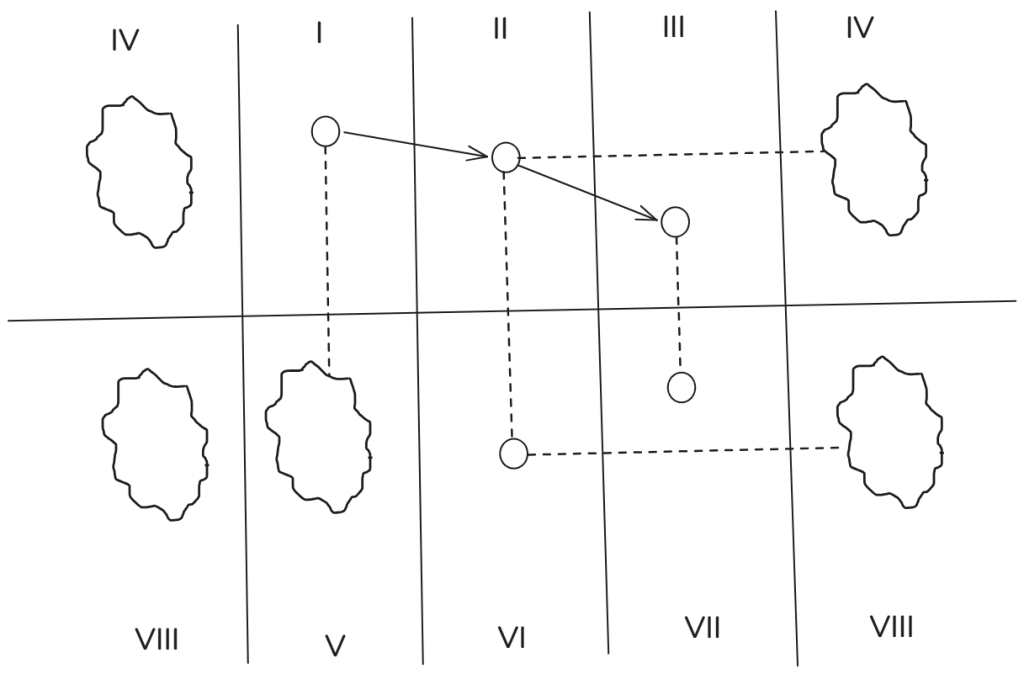
Figure 5. Ring structure: IV and VIII shown to the left of I
This representation does not create new functions and does not alter the structure already constructed. It merely makes visible the adjacency of positions within the ring.
Only now does another property of the resulting structure become apparent.
Two Secondary Functions
Jung also referred to the auxiliary function as the secondary function.
Let us now consider IV.
It satisfies the same basic structural conditions that were specified for the auxiliary function:
- relative to the dominant function, it belongs to the other class: if the dominant function is rational, IV is irrational, and vice versa;
- it has the same attitude as the dominant function;
- its content can be activated only in connection with an already existing element of the dominant function.
There is, however, a fundamental difference between II and IV:
- II is fully differentiated;
- IV is fully undifferentiated.
According to their positions in the ring structure, we will call:
- II the right secondary function;
- IV the left secondary function.
Both secondary functions can be activated in connection with an already existing element of the dominant function, but alternatively.
If II is activated, IV remains passive.
If IV is activated, II is not activated.
The dominant function occupies a special position here: its elements may continue to arise spontaneously, while the direction of further processing depends on which of the two secondary functions receives attention.
The Left Secondary Function and the Fusion of Undifferentiated Content
Function IV is undifferentiated.
But the neighboring functions VIII and V are also undifferentiated.
Because undifferentiation means fusion, the content of IV, VIII, and V does not exist as three articulated, independent sequences of elements.
Their contents are fused.
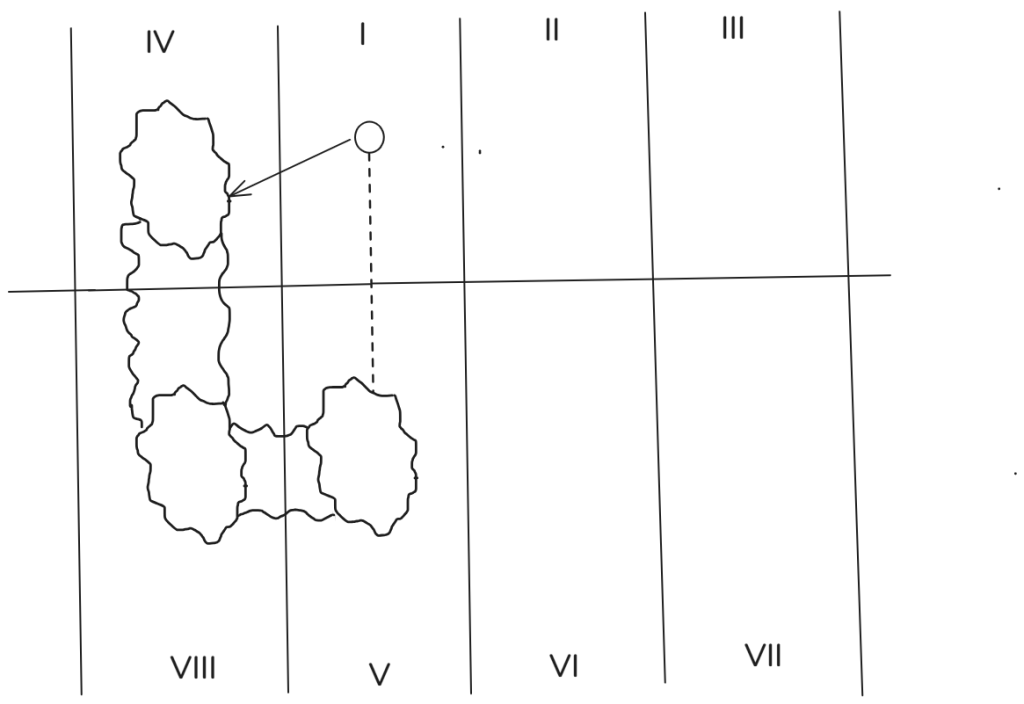
Figure 6. Fused content of functions IV, VIII, and V
This has an important consequence.
IV is located in the conscious part of the initial structure. VIII and V are initially located in the unconscious part.
However, because the contents of all three functions are fused, IV cannot be activated separately from VIII and V.
When IV is activated, the undifferentiated content of VIII and V that is fused with it is therefore also brought into consciousness.
VIII and V do not become differentiated in the process. What enters consciousness is precisely undifferentiated, unarticulated content.
In this state, therefore, only the dominant function remains differentiated.
Such a state corresponds to the one-sidedness and imbalance of consciousness described by Jung.
Temporal Direction
We can now return to the arrows.
An arrow indicates neither logical implication nor causation as such, but the temporal sequence in which contents arise.
In the original part of the scheme, time runs from left to right:
I → II → III
After the ring transformation, however, IV is located to the left of I.
If IV is activated after an element of I, the later content is located to the left of the earlier content in the diagram.
The arrow therefore points from right to left:
IV ← I
This does not mean that time itself begins to run backward.
Time continues to move forward. Only its graphical representation on this section of the ring structure proceeds from right to left.
It is precisely from this that the names of the two emerging paths are derived.
The Right and Left Paths
Up to this point, the existence of two paths has not been introduced as an independent assumption.
It now emerges from the structure already constructed.
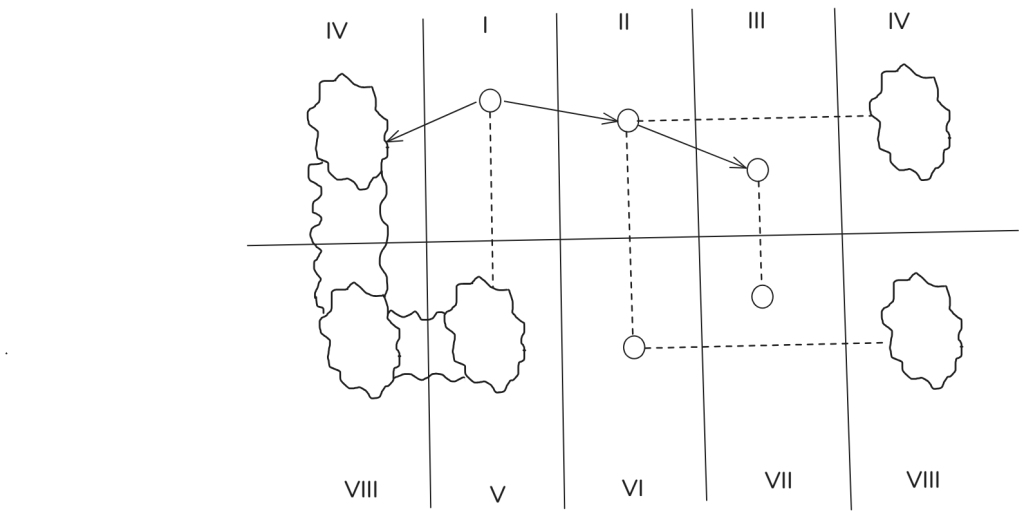
Figure 7. Left and right possibilities relative to the dominant function
If attention is directed toward II, the temporal sequence of function elements unfolds to the right in the diagram.
If attention is directed toward IV, the sequence unfolds to the left.
We therefore call the two resulting configurations:
- the right path;
- the left path.
The names refer exclusively to their position and to the direction of temporal sequence in the diagram.
The Right Path
On the right path, after an element of the dominant function, the differentiated right secondary function II is activated.
Then, according to the relationships already constructed, the differentiated functions
- II,
- VI,
- III,
- VII
operate.
Together with the dominant function, they form the differentiated structure of the right path.
VI and VII bring the results of processes in the opposite attitude into consciousness as completed differentiated contents.
Because the processes of their formation are unconscious while their completed contents become conscious, these results can appear as insights.
The undifferentiated functions IV, VIII, and V do not belong to the active configuration of this path.
The Left Path
On the left path, after an element of the dominant function, the undifferentiated left secondary function IV is activated.
Because IV is fused with VIII and V, the entire undifferentiated content
IV + VIII + V
is activated at the same time.
Only the dominant function I remains differentiated.
The chain consisting of the differentiated functions II, VI, III, and VII does not participate in this active configuration.
The left path therefore does not consist of a dominant function plus two or three “missing” functions. All four psychic functions are present, but three of them are fully undifferentiated and fused with one another.
General Representation of the Two Paths
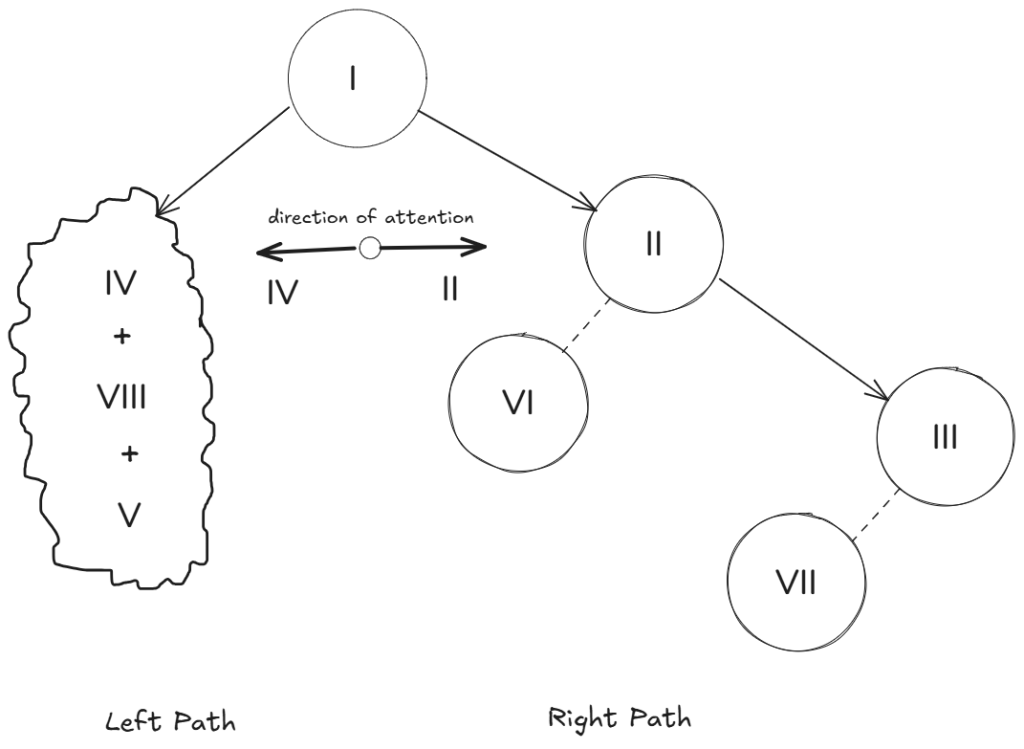
Figure 8. General representation of the right and left paths
The resulting structure shows two mutually exclusive ways in which psychic content can be organized around the dominant function.
The dominant function is present in both cases and can continue to generate its elements spontaneously.
The difference lies in which secondary function is activated:
II — the differentiated right secondary function
or
IV — the undifferentiated left secondary function.
The direction of attention toward one of these two functions determines which configuration becomes active.
The two secondary functions cannot be active simultaneously.
If II is activated, IV remains inactive.
If IV is activated, II remains inactive; together with II, the differentiated structure connected with it is also inactive.
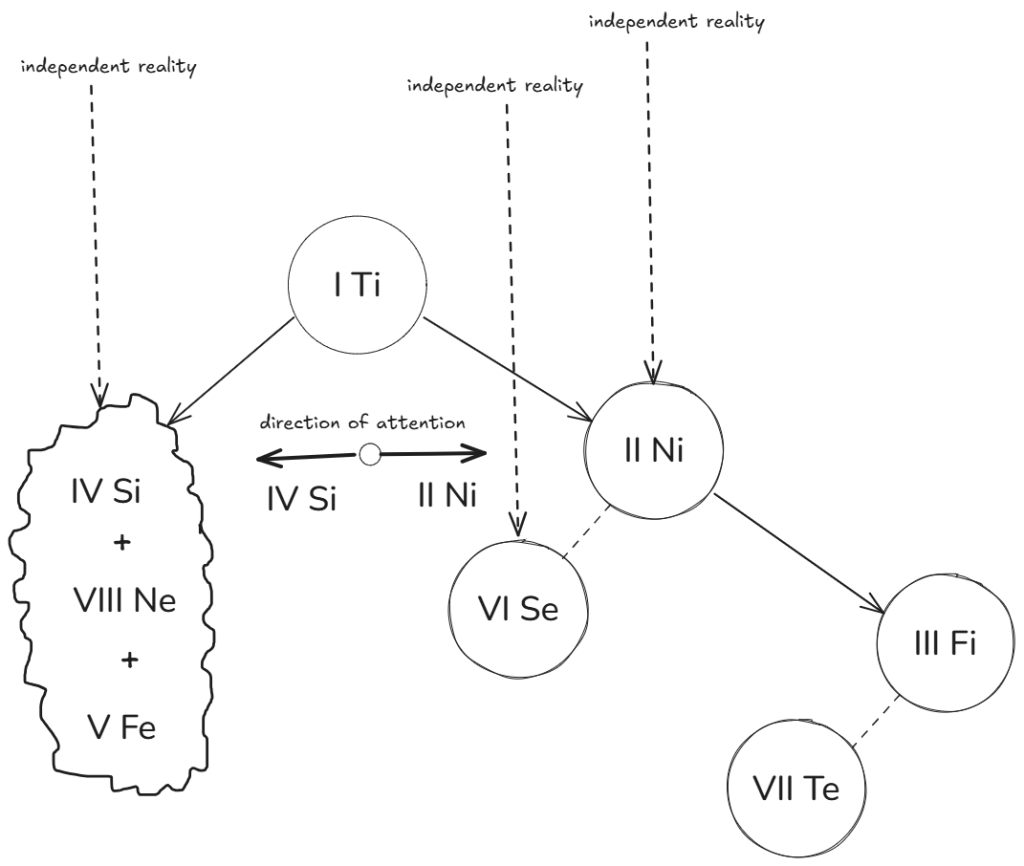
Figure 9. Model of Consciousness for Type ITN
An Unpresupposed Result: All Four Psychic Functions Are Present on Both Paths
Let us now consider not the eight positions, but the four basic psychic functions T, F, N, and S.
A result now becomes visible that was not introduced as an additional condition of the model:
All four psychic functions are present on both paths.
They are, however, organized in fundamentally different ways.
On the Right Path
On the right path, all four psychic functions are represented in differentiated form.
The structure consists of distinct elements of differentiated functions connected through directed relationships.
The dominant function is especially highly differentiated because the same basic psychic function is also represented in the opposite attitude by VII.
The right path therefore forms an articulated structure of differentiated psychic functions.
On the Left Path
All four psychic functions are also present on the left path.
Only the dominant function, however, is fully differentiated.
The remaining three psychic functions are fully undifferentiated. Their contents are not separated from one another but fused.
Thus, the right and left paths do not differ in the number or inventory of psychic functions.
S, N, F, and T are present in both configurations.
The difference lies in the form of their differentiation and structural organization.
Two Different Ways of Bringing Unconscious Content into Consciousness
A further result of the construction can now be seen.
In the initial scheme, positions I–IV were assigned to the conscious attitude and positions V–VIII to the unconscious attitude.
In both of the resulting configurations, however, all four psychic functions become active in consciousness.
This occurs through fundamentally different mechanisms on the two paths.
On the Right Path
The contents of VI and VII are formed through unconscious processes.
Yet VI and VII arise as fully differentiated functions.
Their completed results therefore enter consciousness.
Consciousness does not experience the entire process through which they are formed; it receives the already completed result.
This can be experienced as sudden knowledge, sudden understanding, or insight.
Unconscious processing here therefore produces a differentiated conscious result.
On the Left Path
VIII and V remain fully undifferentiated.
They do not enter consciousness because they become differentiated.
The mechanism is different.
IV is also fully undifferentiated but is located in the conscious part of the original structure. Since IV, VIII, and V are fused as undifferentiated functions, IV cannot be activated independently of the other two.
When IV is activated, the content of VIII and V fused with it is therefore simultaneously brought into consciousness.
In more formal terms:
Because IV, VIII, and V are fully undifferentiated and their contents are fused, the activation of IV simultaneously causes the content of the originally unconscious functions VIII and V that is fused with it to become active in consciousness.
VIII and V do not thereby become differentiated.
The content entering consciousness remains undifferentiated and fused.
The Same Formal Effect — Two Different Mechanisms
In one respect, therefore, both paths lead to the same result:
All four psychic functions are represented in consciousness on both paths.
The mechanisms by which this occurs are fundamentally different.
On the right path:
unconscious process → differentiated result → consciousness
On the left path:
undifferentiated IV → fusion with VIII and V → joint appearance in consciousness
The right path therefore provides conscious access to differentiated results.
The left path produces conscious activation of fused undifferentiated content.
These two possibilities were not introduced as two presupposed forms of organization of consciousness. They arose only from the construction.
Example: Type ITN
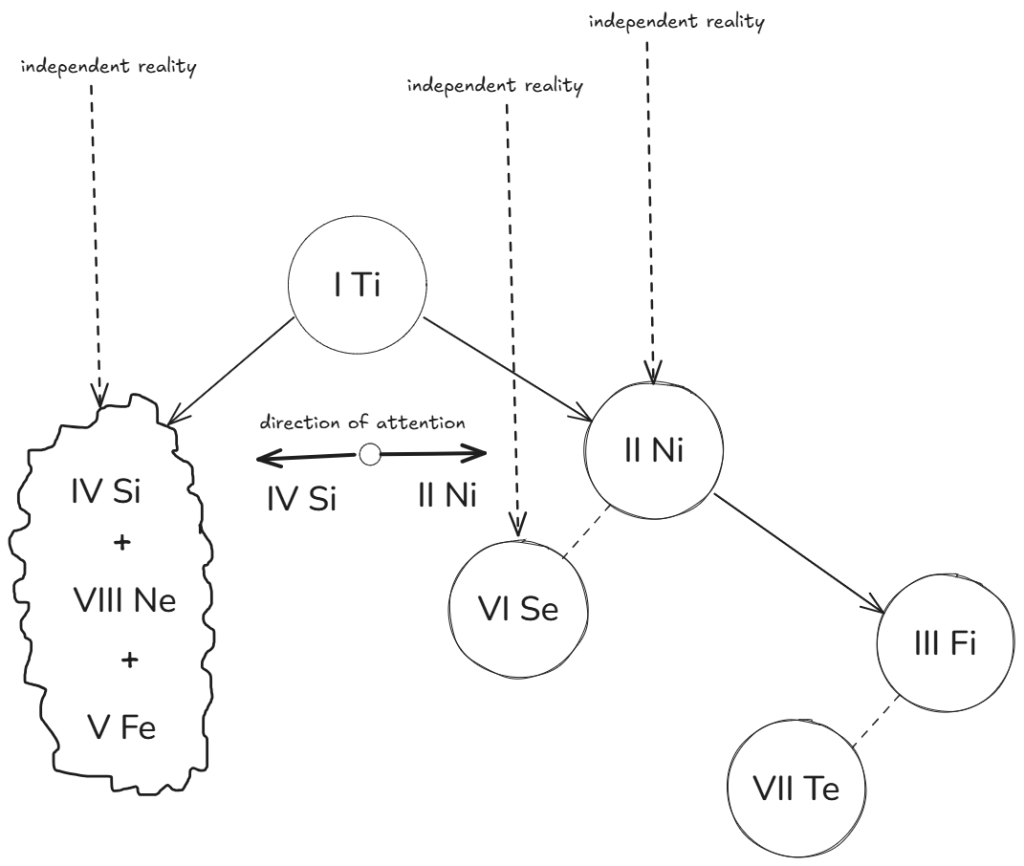
Let us consider, as an example, an introverted type with thinking as the dominant function and perception of changes as the auxiliary function:
ITN.
The dominant function is introverted thinking:
I Ti
The auxiliary function belongs to the irrational pair and has the same attitude as the dominant function:
II Ni
The function opposite to the dominant within the same attitude is:
III Fi
The function opposite to the auxiliary within the same attitude is:
IV Si
In the opposite attitude, we obtain:
V Fe
VI Se
VII Te
VIII Ne
The complete structure is therefore:
- I Ti — dominant function, differentiated;
- II Ni — right secondary function, differentiated;
- III Fi — third function, differentiated;
- IV Si — left secondary function, undifferentiated;
- V Fe — undifferentiated;
- VI Se — differentiated insight function;
- VII Te — differentiated insight function;
- VIII Ne — undifferentiated.
The Right Path in Type ITN
In the active configuration of the right path, the following are present:
- Ti — thinking;
- Ni — perception of changes;
- Se — perception of invariants;
- Fi — generation of significance for the subject;
- Te — the same basic psychic function as the dominant function, but in the opposite attitude.
If we consider the four basic psychic functions rather than their attitudes, we have:
- T,
- N,
- S,
- F.
That is, all four psychic functions.
And all four are differentiated.
The Left Path in Type ITN
On the left path, the active functions are:
- Ti — differentiated;
- Si — undifferentiated;
- Ne — undifferentiated;
- Fe — undifferentiated.
Again we find:
- T,
- S,
- N,
- F.
Thus, once again, all four psychic functions are present.
The difference is that only Ti is differentiated.
Si, Ne, and Fe are fully undifferentiated, and their contents are fused.
What Was Assumed — and What Emerged Only from the Construction?
After completing the construction, we can now clearly distinguish the additional assumptions of the model from the results that emerged from them.
We did not assume that a differentiated sixth function must exist.
It emerged during the construction together with II.
We did not assume that a differentiated seventh function must exist.
It emerged later together with III.
We did not assume that there must be two alternative paths of consciousness.
This possibility became visible only after all eight positions had been constructed, the ring structure had been taken into account, and it became apparent that both II and IV satisfy the structural conditions of a secondary function while differing fundamentally in their differentiation.
We did not assume that all four psychic functions had to be present on both paths.
This becomes apparent only after both configurations have already been constructed.
Nor was it assumed that originally unconscious content could become active in consciousness through two fundamentally different mechanisms.
That too emerged only from the construction:
- on the right path through differentiated insight functions;
- on the left path through the fusion of undifferentiated functions.
For this reason, it is essential not to confuse the assumptions of the model with its results after the fact.
If VI and VII, the two paths, or the complete representation of all four psychic functions on both paths were placed among the axioms from the outset, precisely what the construction demonstrates would disappear.
Why the Resulting Model Is a Model of Consciousness
At the beginning of the construction, four positions were assigned to the conscious attitude and four positions to the unconscious attitude.
This initial construction remains necessary because it is only in this way that Jung’s opposition between the two attitudes can be formally represented and the subsequent structure can be built.
The result, however, changes the meaning of this original spatial division.
On the right path, the differentiated results of the originally unconscious processes VI and VII enter consciousness.
On the left path, the originally unconscious contents of VIII and V become active in consciousness together with IV because the three undifferentiated functions are fused.
The completed model therefore does not simply depict two spatially separate domains — consciousness above and the unconscious below.
Rather, it shows how the contents of the four psychic functions can be organized in consciousness and how unconscious processes participate in this organization.
The unconscious does not disappear from the model.
It remains indispensable for the generation of psychic content.
But the resulting structure primarily describes the organization of consciousness.
In this sense, it is a model of consciousness.
Conclusion
The construction of the model begins with a limited set of Jungian propositions and additional assumptions concerning how psychic functions arise, how their elements are connected, and how differentiation and undifferentiation are to be understood.
First, a differentiated element of the dominant function I arises, together with the undifferentiated content of the opposite function V.
Next, only in connection with the already existing element of the dominant function, a differentiated element of the auxiliary function II arises.
This step simultaneously produces a differentiated function VI and the fully undifferentiated functions IV and VIII.
After that, only in connection with the element of the auxiliary function, a differentiated element of the third function III arises. At the same time, the differentiated function VII arises.
All eight positions are now occupied.
Only after this is the ring structure of the resulting configuration taken into account. This allows IV and VIII to be represented to the left of I.
It then becomes apparent that not only II but also IV satisfies the structural conditions of a secondary function.
The two secondary functions, however, differ fundamentally:
II is fully differentiated.
IV is fully undifferentiated.
Because both can be activated only in connection with an already existing element of the dominant function, and because their activation is alternative, two different temporal directions of further organization emerge.
The sequence through II runs to the right in the diagram.
The sequence through IV runs to the left.
Thus the right and left paths emerge.
On the right path, all four psychic functions become active in consciousness in differentiated form. Contents whose formation takes place unconsciously in the opposite attitude enter consciousness through the differentiated insight functions VI and VII as completed results.
On the left path, all four psychic functions are likewise present. Only the dominant function, however, remains differentiated. The other three are fully undifferentiated and fused. The originally unconscious contents of VIII and V become active in consciousness together with the conscious function IV.
Thus, the right and left paths do not differ in which psychic functions are present.
S, N, F, and T are present on both paths.
They differ in how these functions are differentiated, connected, and organized in consciousness.
The differentiated insight functions VI and VII, the two alternative paths, and the complete presence of all four psychic functions on both paths were not introduced into the starting assumptions as desired properties.
They emerge from the construction of the model.